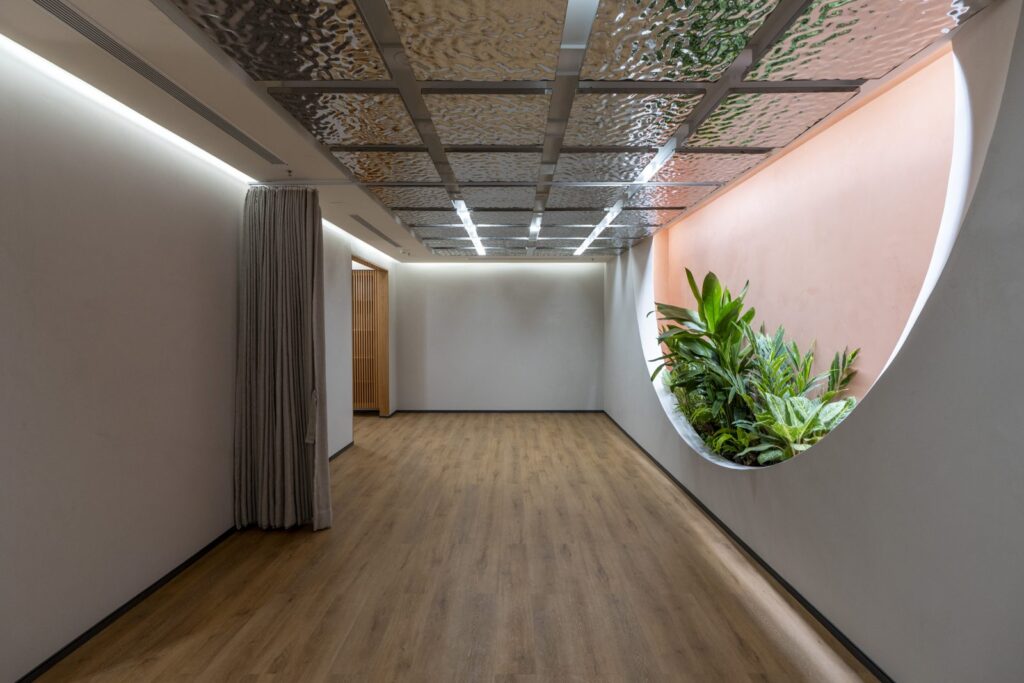

Choosing a suspended ceiling comes down to four questions: how much noise must it control, what access do you need above it, what are the fire and moisture demands, and what should it look like? Answer those and the right system becomes clear.
Grid & system types
- Exposed (lay-in) — visible T-grid, tiles drop in; fast and fully accessible.
- Semi-concealed — most of the grid hidden for a cleaner line, tiles still removable.
- Concealed / clip-in & hook-on — a flush, grid-free surface (common in metal ceilings).
- Bandraster — wider profile bands for a structured, partition-friendly module.
- Clear-spanning — fewer suspension points over corridors and wide rooms.
- Seamless — a jointless, monolithic plane for prestige interiors.
Performance to specify
Set targets for acoustic absorption (αw / NRC), fire rating, and humidity/hygiene resistance based on the room. A hospital ward, a swimming pool and an office all demand different ceilings.
Material choice
Mineral tiles lead on acoustics and value; metal ceilings on durability and design; humidity-resistant tiles for wet and hygienic rooms. Manufacturers like OWA offer all three so a project can stay within one coherent system family.
Frequently Asked Questions
What types of suspended ceiling systems are there?
The main types are exposed (lay-in) grid, semi-concealed, concealed clip-in/hook-on, bandraster, clear-spanning, and seamless ceilings — each balancing access, appearance and span differently.
How do I choose the right ceiling system?
Match the system to four needs: acoustic performance, access to services above, fire and humidity requirements, and the look you want. Then pick a tile/material that meets the targets.
What is the difference between exposed and concealed ceiling grids?
Exposed grids show the T-bar and allow tiles to be lifted out easily; concealed grids hide the framework for a flush, seamless appearance with demountable access.